Simple Data. Rich Semantics. Adaptive Interaction.
Libertas bridges computational simplicity and the richness of human cognition through declarative interaction semantics.
A Boolean field holds true or false. Add a Default, a few words of answer
text, or an optional (Nullable) type to its declaration, and every client asks
a different question, each one correct for what the field means. A Union goes
one step further: each answer brings its own questions. The App writes no UI
code. Each example below shows the declaration, what the person
sees, and why it matters.
Try the seven examples on an interactive phone: step from one declaration to the next and answer each question yourself.
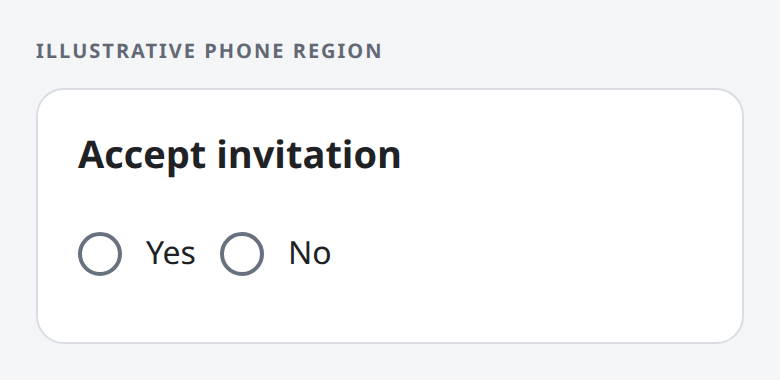
Required decision
/// Accept invitation
/// Choose whether to accept the invitation.
pub accept_invitation: bool,
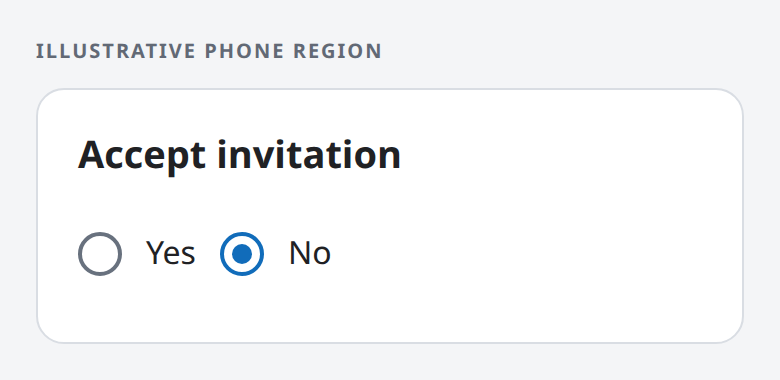
What the person sees: Yes and No, neither selected. The editor cannot be
submitted until one is chosen. Yes stores true; No stores false.
Why it matters: an unanswered question is never quietly saved as false.
false.Answers in the person's words
/// Accept invitation
/// [TrueText]
/// I accept
/// [FalseText]
/// I decline
pub accept_invitation: bool,
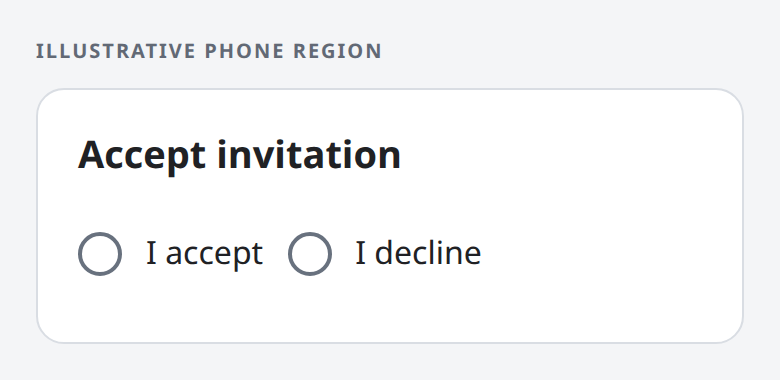
What the person sees: the two answers read “I accept” and “I decline”. An answer is still required.
Why it matters: the person answers in plain words, while the App still
receives true or false. Answer text never changes the stored value.
A preset preference
/// Receive reminders
#[libertas_default(false)]
pub receive_reminders: bool,
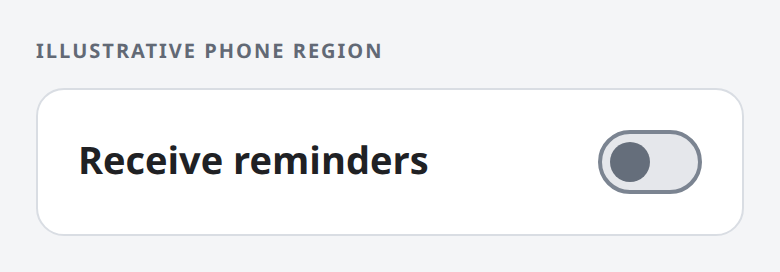
What the person sees: an on/off switch, starting off. A switch appears only when a Boolean has a Default and no answer text.
Why it matters: a setting with a sensible starting value takes one tap to change, and needs no answer to be submitted.
false.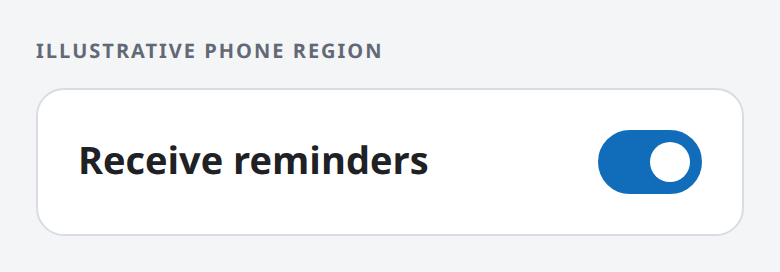
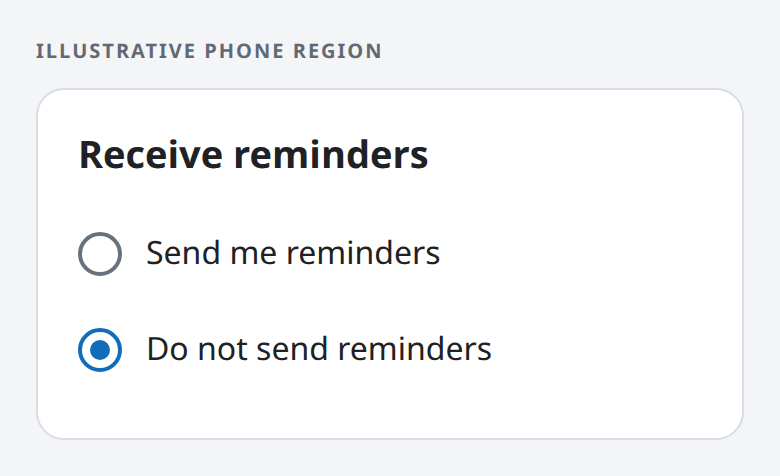
true.A preset answer in the person's words
/// Receive reminders
/// [TrueText]
/// Send me reminders
/// [FalseText]
/// Do not send reminders
#[libertas_default(false)]
pub receive_reminders: bool,
What the person sees: two worded answers, with “Do not send reminders” already selected. Answer text keeps the two choices even with a Default.
Why it matters: the person sees exactly what the preset means and can change it, rather than guessing what “on” would do.
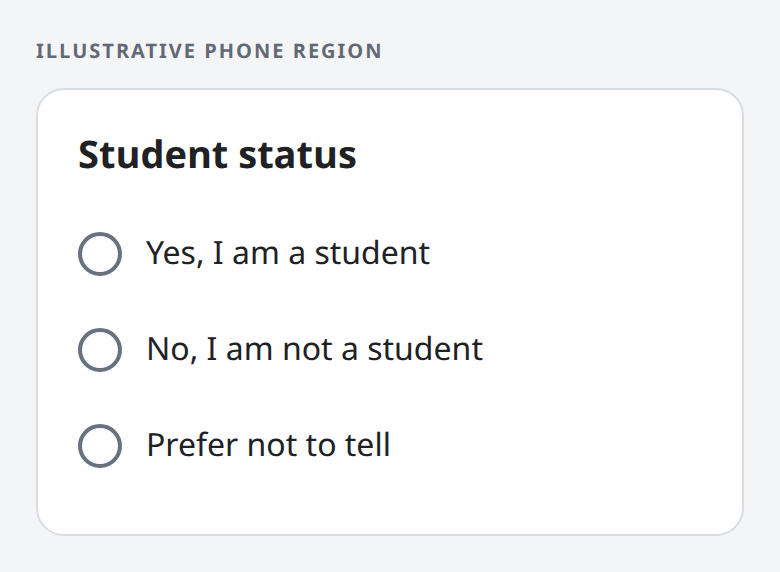
false.Three answers
/// Student status
/// [TrueText]
/// Yes, I am a student
/// [FalseText]
/// No, I am not a student
/// [NullText]
/// Prefer not to tell
pub student_status: Option<bool>,
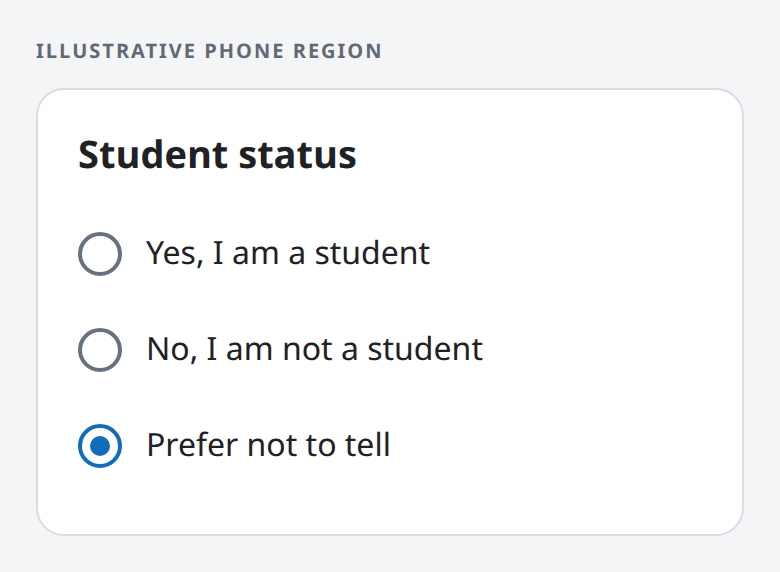
What the person sees: three answers in this order, none selected. “Prefer
not to tell” stores null, and all three stay visible after any choice.
Why it matters: declining to answer is a real answer, distinct from not having answered yet. Only an unanswered question blocks submission.
null.Null as a complete answer
/// Date of death in 2026
/// [NullText]
/// Alive at the end of 2026
/// [SetText]
/// Died in 2026 on
#[libertas_date_only]
#[libertas_number(min = 20260101, max = 20261231)]
#[libertas_default($null)]
pub death_date: Option<u32>,
This field comes from a tax return. Its optional date holds both the person's status and the date.
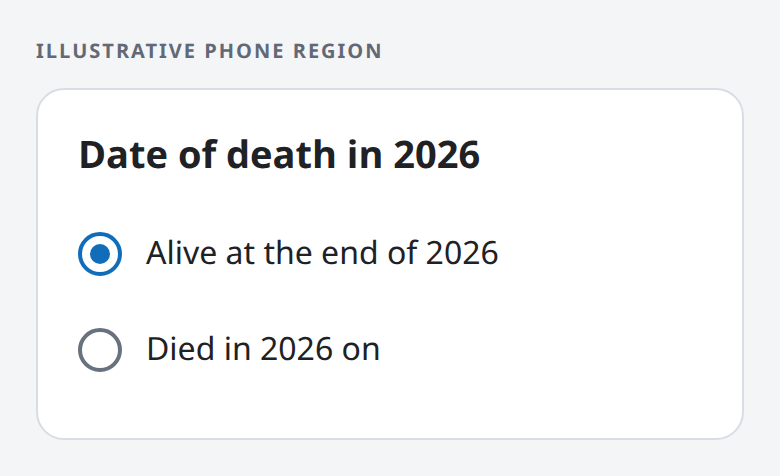
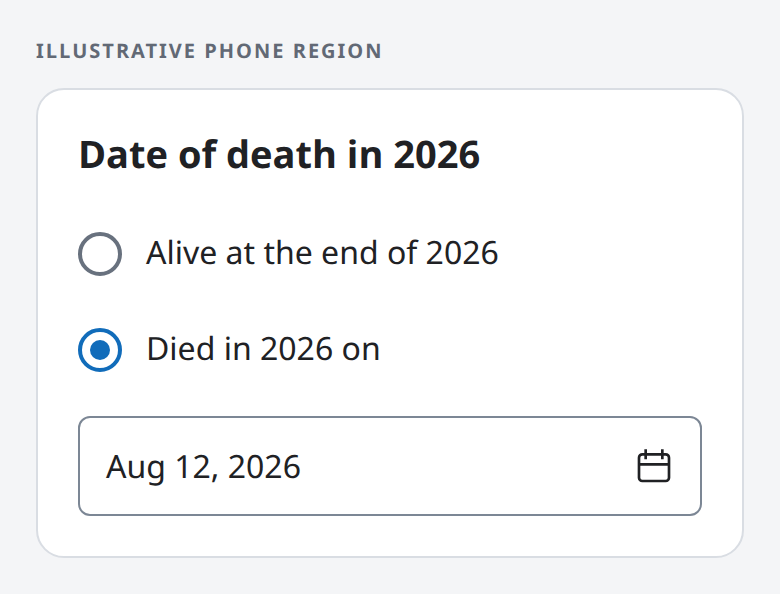
What the person sees: one question with two answers. “Alive at the end of 2026” starts selected, because the Default is null. Choosing “Died in 2026 on” opens a date editor directly below, limited to 2026. While the date is blank, the question is unanswered and the editor cannot be submitted.
Why it matters: null is a complete answer here, not missing data. One field replaces a separate status Boolean and a date that only sometimes applies.
null.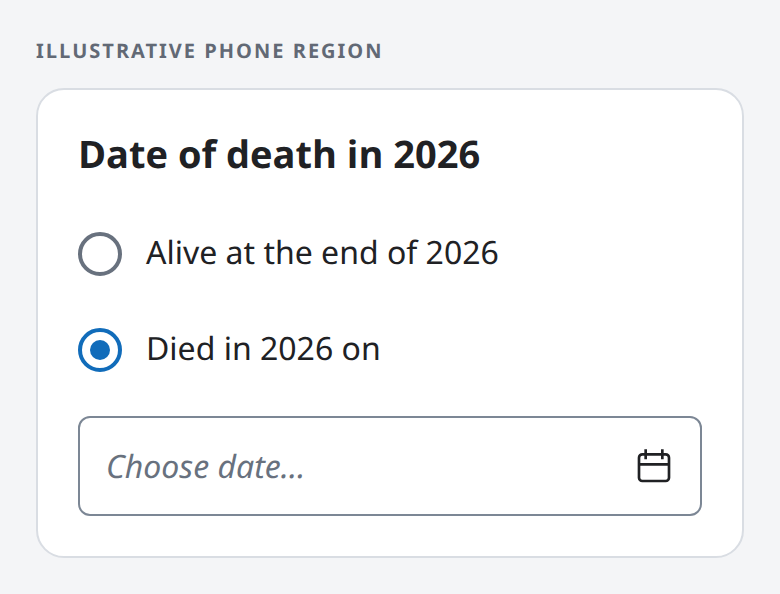
20260812.Answers that bring their own questions
/// Reply to the invitation
#[libertas_inline_choices]
pub reply: Reply,

pub enum Reply {
    /// I will attend
    Attending {
        /// Guests besides me
        #[libertas_number(min = 0, max = 3)]
        guests: u32,
    },
    /// Not sure yet
    Tentative {
        /// I will confirm by
        #[libertas_date_only]
        #[libertas_number(min = 20261101, max = 20261130)]
        confirm_by: u32,
    },
    /// I cannot attend
    Declined,
}
A Rust enum whose variants carry data is a Union. Each variant's comment is its answer text, and each variant's fields are the questions that answer brings.
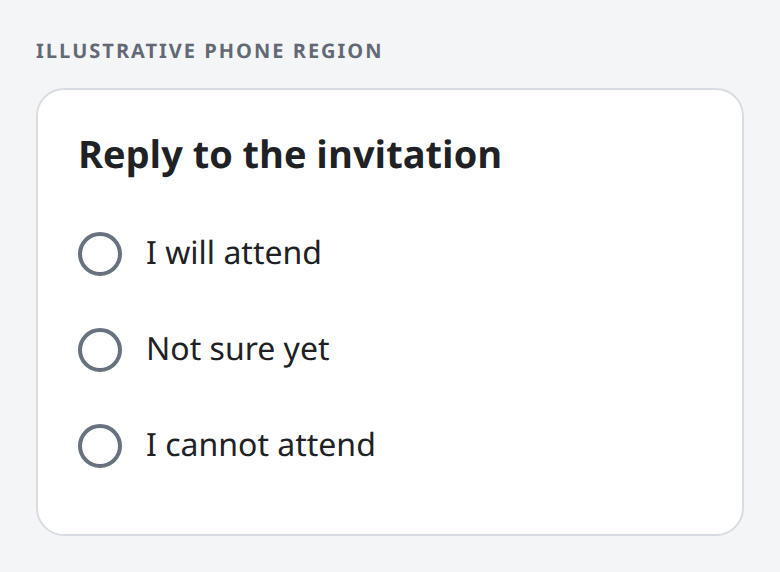
What the person sees: three answers, none selected. Choosing one draws its own questions directly below it: a guest count under “I will attend”, a date under “Not sure yet”, nothing for “I cannot attend”. Choosing another answer replaces those questions.
Why it matters: the declaration is the whole condition, so the App writes no show/hide logic. An impossible combination, such as declining with two guests, cannot be stored. The editor can be submitted only when an answer is chosen and that answer's own questions are answered; a blank guest count is unanswered, never zero.
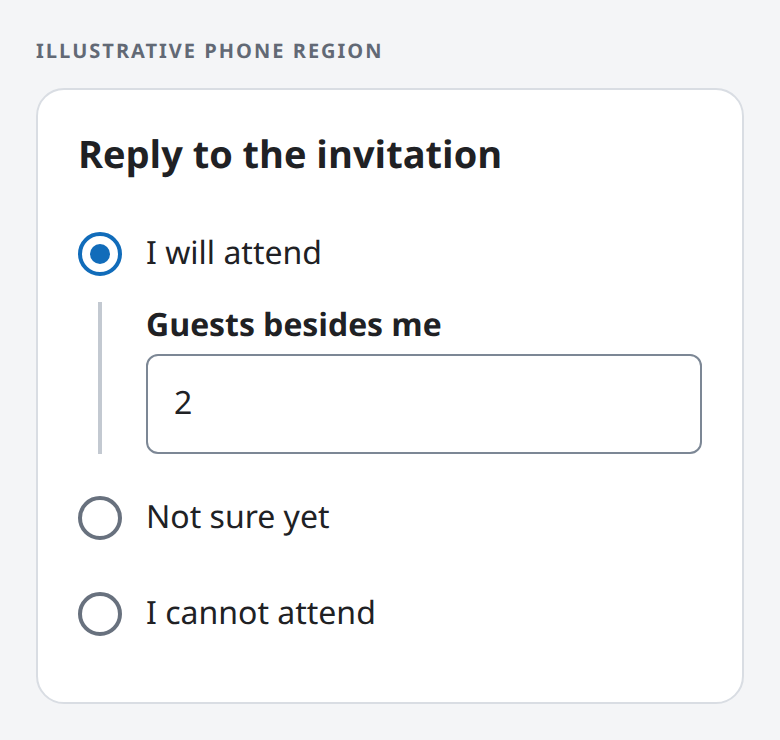
Attending { guests: 2 }.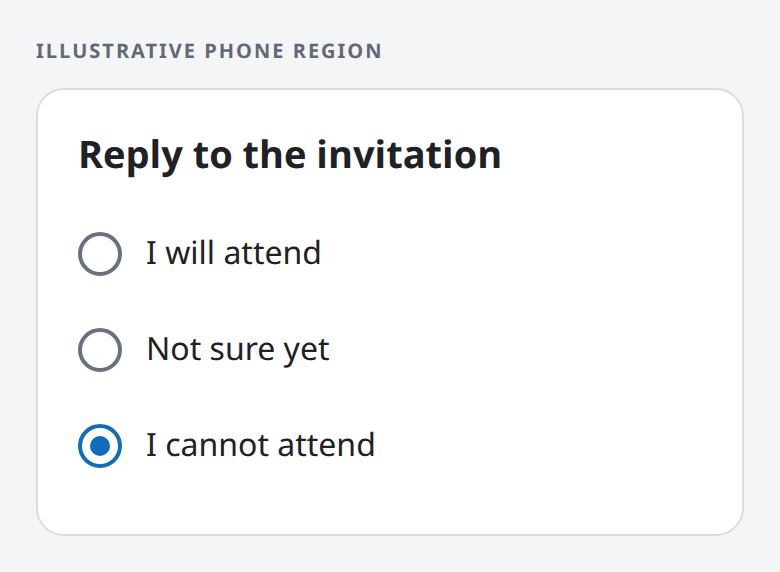
Declined.The same meaning in every language
Answer texts are ordinary localized documentation. Translating them changes only the words a person reads; the stored values, the validation and the way each question behaves stay the same, with no change to App code.
About these examples
Each fragment is one field of an App's Rust type, not a complete App. Every example is a fresh editable field with no value supplied by the App or copied from earlier data. The phone regions are illustrative mockups rendered from HTML, not product screenshots; each client draws the same controls in its own native style.
The exact rules live in the reference:
Boolean answer controls,
Nullable choices,
inline choices for a Union,
answer texts and other document properties,
reserved Default values such as $null
and validation.